


However, analyzing his regime strictly through standard historical lenses misses a crucial operational mechanism that actually facilitated his rapid ascent.
Most analysts focus purely on his fiery speeches or the economic despair of the era, but one specific psychological trigger—which modern toxic leaders still quietly exploit today—transformed his followers from political supporters into fanatical instruments of destruction.
We will break down exactly how this hidden mechanism operated in the next section.
The Core Elements: Autocratic Leadership and the Führerprinzip
Autocratic leadership defined the entire structural hierarchy of his regime, stripping away all institutional checks and balances.
At the absolute center of this system sat the Führerprinzip (the leader principle), a doctrine decreeing that the leader’s word functioned as the ultimate, unchallengeable law. This framework demanded absolute obedience from every citizen, bureaucrat, and soldier, completely eradicating debate, consensus, or internal dissent.
In the 1920s and 1930s, while America navigated an era of illicit underground economies characterized by a Prohibition style defiance of federal law, Germany experienced the exact opposite extreme.
The nation fell under a rigid, top-down enforcement of ideology where defying the leader meant certain death.
The Führerprinzip ensured that authority cascaded downward while responsibility flowed strictly upward. Officers swore oaths of personal loyalty not to the constitution or the nation, but directly to the dictator, creating a highly efficient but ultimately rigid and brittle chain of command that fractured under pressure.
The Dark Triad: Narcissism, Paranoia, and Micromanagement
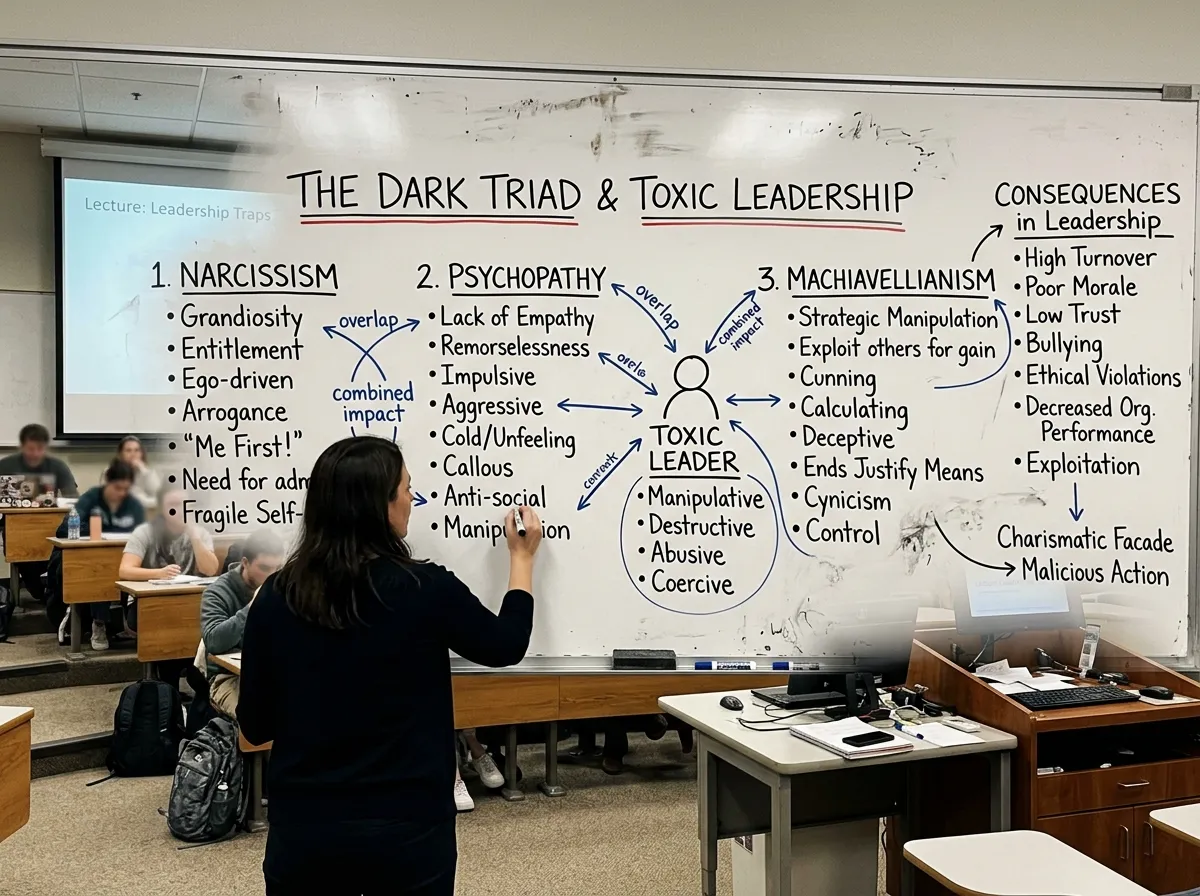
Psychologists and historians frequently map his behavior directly to the Dark Triad of personality traits: extreme narcissism, psychopathy, and Machiavellianism.
His deep-seated narcissism required constant validation and adulation, leading him to construct a reality where his strategic genius was infallible—a delusion heavily documented in the rambling, venomous pages of Mein Kampf.
This unchecked narcissism quickly bred intense paranoia. Convinced that his own elite generals were constantly plotting against him, he instituted severe micromanagement across all military and political operations.
He flatly refused to delegate critical decisions, insisting on approving even minor tactical troop movements on the Eastern Front.
Much like a master distiller meticulously guarding the exact recipe for an Alabama style whiskey to ensure absolute purity and control over the final product, Hitler demanded total ideological and operational purity. This obsessive need to manage every detail created severe bottlenecks, paralyzing his command structure when rapid decisions were desperately needed.
How Propaganda and Mass Manipulation Maintained Control
Maintaining absolute power required more than just military force; it required the total colonization of the public mind.
Through relentless propaganda engineered by Joseph Goebbels, the state weaponized information to craft an inescapable Cult of Personality.
The regime flooded the airwaves with cheap radios (the Volksempfänger) restricted to state frequencies, systematically erasing objective reality. They replaced the truth with a fabricated narrative that positioned the dictator as the sole, infallible savior of the nation.
Simultaneously, Heinrich Himmler and his sprawling security apparatus utilized mass manipulation and institutionalized terror to enforce total compliance.
The Third Reich functioned on a foundational bedrock of fear and intimidation. Citizens lived under the constant, suffocating threat of the Gestapo, knowing that even a whispered criticism could result in immediate execution or imprisonment in a concentration camp.
This dual strategy—inspiring fanatical devotion while simultaneously crushing all dissent through terror—effectively neutralized any organized internal resistance.
3 Lessons Modern Leaders Can Learn from Toxic Leadership
Studying extreme totalitarianism provides crucial warning signs for modern organizations. While corporate environments obviously do not mirror fascist dictatorships, the underlying psychological dynamics of toxic leadership often surface in boardrooms, startups, and management structures.
- A lack of psychological safety destroys innovation: When leaders aggressively punish dissenting opinions, employees hide critical failures until they compound into catastrophic disasters.
- Extreme centralization kills agility: Leaders who refuse to delegate create operational bottlenecks that paralyze their teams during crises.
- Relying on fear guarantees high turnover: True authority stems from competence, vision, and empathy, not from coercing subordinates into silent, terrified compliance.
Contrasting Hitler’s Style with Transformational Leadership
Leadership scholars frequently debate whether malicious dictators fit the definition of transformational leadership. Traditional transformational leaders inspire their teams to achieve a shared, positive vision through empathy, intellectual stimulation, and individualized consideration.
They elevate the moral and ethical standards of their followers.
Hitler certainly possessed dark charisma and inspired millions to follow a shared vision, but his methods represent destructive transformational leadership.
Instead of elevating his followers, he expertly exploited their deepest economic fears, racial prejudices, and historical grievances. His brand of charisma did not empower individuals to think critically; it stripped them of their autonomy and subjugated them entirely to a destructive, apocalyptic ideology.
The Final Cost of Dictatorial Control and Military Blunders
The ultimate failure of this autocratic regime highlights the fatal operational flaw of absolute centralized power.
During the late stages of World War II, the dictator’s stubborn refusal to listen to seasoned military strategists led to catastrophic defeats, most notably at Stalingrad and during the Allied invasion of Normandy. On D-Day, vital Panzer reserves sat idle because the dictator was sleeping, and no general dared wake him to request authorization.
His command structure became fatally inflexible.
Just as the hospitality industry recognizes that rigid serving styles can ruin a patron’s experience by failing to adapt to their individual needs, an unyielding military doctrine ruins armies in the field.
Because field marshals could not alter orders to adapt to rapidly changing battlefield realities without facing execution for treason, entire armies were surrounded, starved, and destroyed. The system’s complete inability to process negative feedback or adjust strategy guaranteed its total collapse.
Conclusion: The Enduring Legacy of Charisma and Terror
The study of this dark era serves as a stark historical reminder of the dangers inherent in unchecked power. Charisma, when coupled with extreme narcissism and enforced through systemic violence, yields catastrophic global results.
Recognizing the early warning signs of autocratic behavior, paranoia, and ideological fanaticism remains essential for preserving healthy, functioning societies and organizations today.
Frequently Asked Questions (FAQ)
What type of leadership style did Adolph Hitler have?
Adolph Hitler utilized an extreme form of autocratic leadership combined with charismatic authority. His approach, known as the Führerprinzip, demanded absolute obedience and relied heavily on propaganda, mass manipulation, and a toxic cult of personality to maintain dictatorial control.
Was Hitler a transformational leader?
While Hitler used charisma to inspire a shared vision, he is often classified as a toxic or destructive transformational leader. Unlike positive transformational leaders, his methods relied on the Dark Triad traits of narcissism, paranoia, and the use of fear and intimidation.
How did Hitler’s micromanagement affect World War II?
Hitler’s extreme paranoia and micromanagement led to severe military blunders. By overriding his experienced generals and centralizing all command decisions, his dictatorial control ultimately caused catastrophic failures for the German military on multiple fronts during the war.
What can modern business learn from Hitler’s leadership?
Modern organizations study Hitler’s leadership to understand the dangers of toxic leadership and autocratic control. His regime highlights the catastrophic risks of unchecked power, the absence of psychological safety, and the destructive nature of relying on fear and intimidation.
What was the Führerprinzip?
The Führerprinzip, or leader principle, was the foundational concept of Hitler’s political authority. It dictated that the leader’s word is above all written law, requiring absolute obedience from subordinates and eliminating any democratic or collaborative decision-making processes.
Get our latest guides, news, and insights highlighted in your Google Search & AI Overviews.